
Fostering Environmental Awareness in Early Childhood
Explore hundreds of printable PDF books that teach kids about animals, plants, and the planet. Help your children understand nature so they learn to love it!
Filter by Tags (Sight Words):
Change Sub-CategoryNo specific tags available in this sub-category.
Nature Story Books (Sight Words) (Total: 2 Books)
Reset All Filters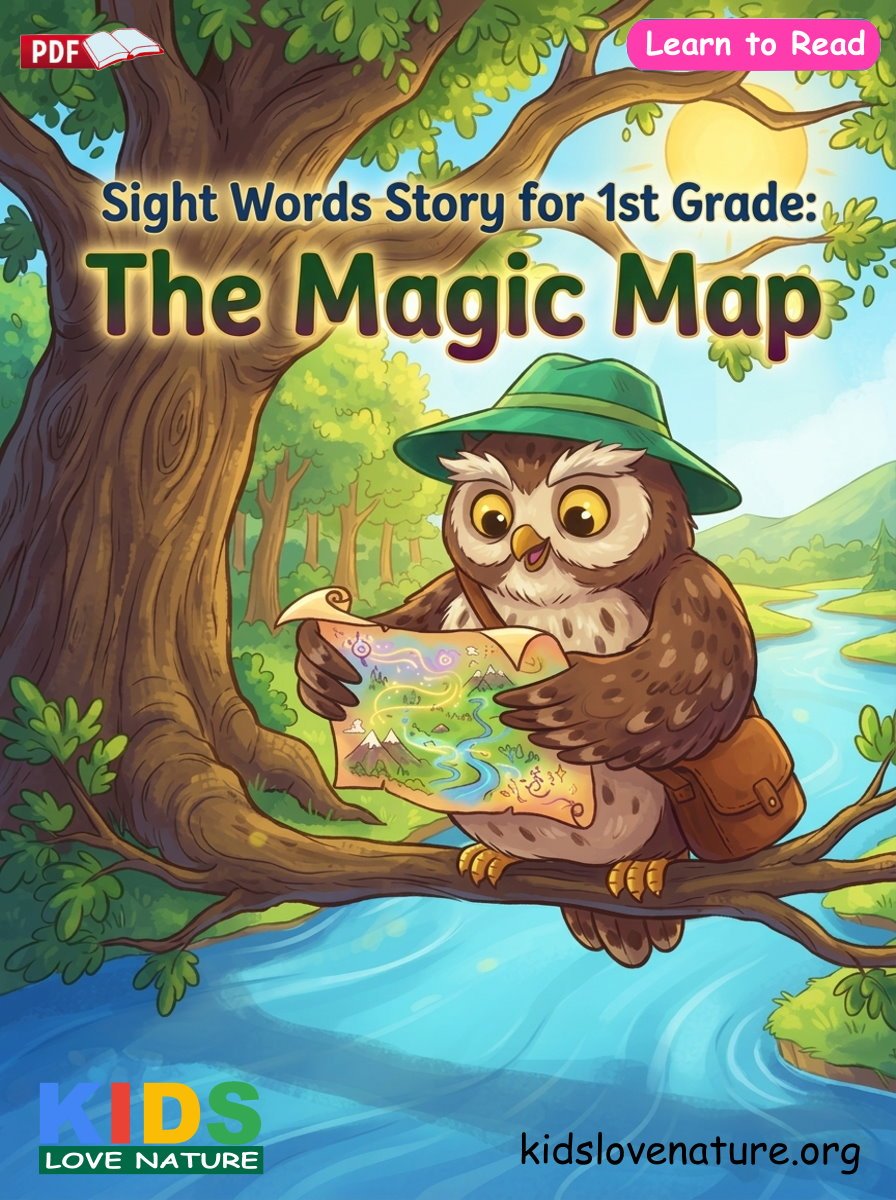
Sight Words Story for Kindergarten: The Magic Map
Embark on a delightful reading adventure with The Magic Map, an engaging early-reading storybook created specifically for Level 1 readers and kindergarteners with a special focus on mastering essential sight words. Featuring simple, repetitive sentences and a charming storyline, this delightful book follows Leo the old owl as he uses a secret map to take a fun trip to the farm to visit his animal friends. Along the way, young readers will naturally encounter and practice high-frequency sight words (such as know, could, walk, live, round, thank, any, give, every, let, open, put, think), building reading fluency while enjoying a heartwarming journey with a cat, a frog, a kind duck, and a happy party in the barn! Designed to build early reading confidence, strengthen vocabulary, and boost sight word recognition, The Magic Map offers the perfect mix of literacy learning and fun storytelling for storytime, beginner reading practice, or classroom libraries. The story is highly effective for 1st-grade learners for several reasons: Repetition: It naturally integrates all the requested Dolch words without feeling overly forced, which is crucial for building "automaticity" in young readers. Simple Structure: The short sentences and 15-paragraph format prevent cognitive overload, making it perfect for a classroom "read-aloud" or a beginner's independent reading session. Positive Themes: It emphasizes social-emotional skills like asking for help, giving thanks, and friendship, which align well with early childhood development goals.
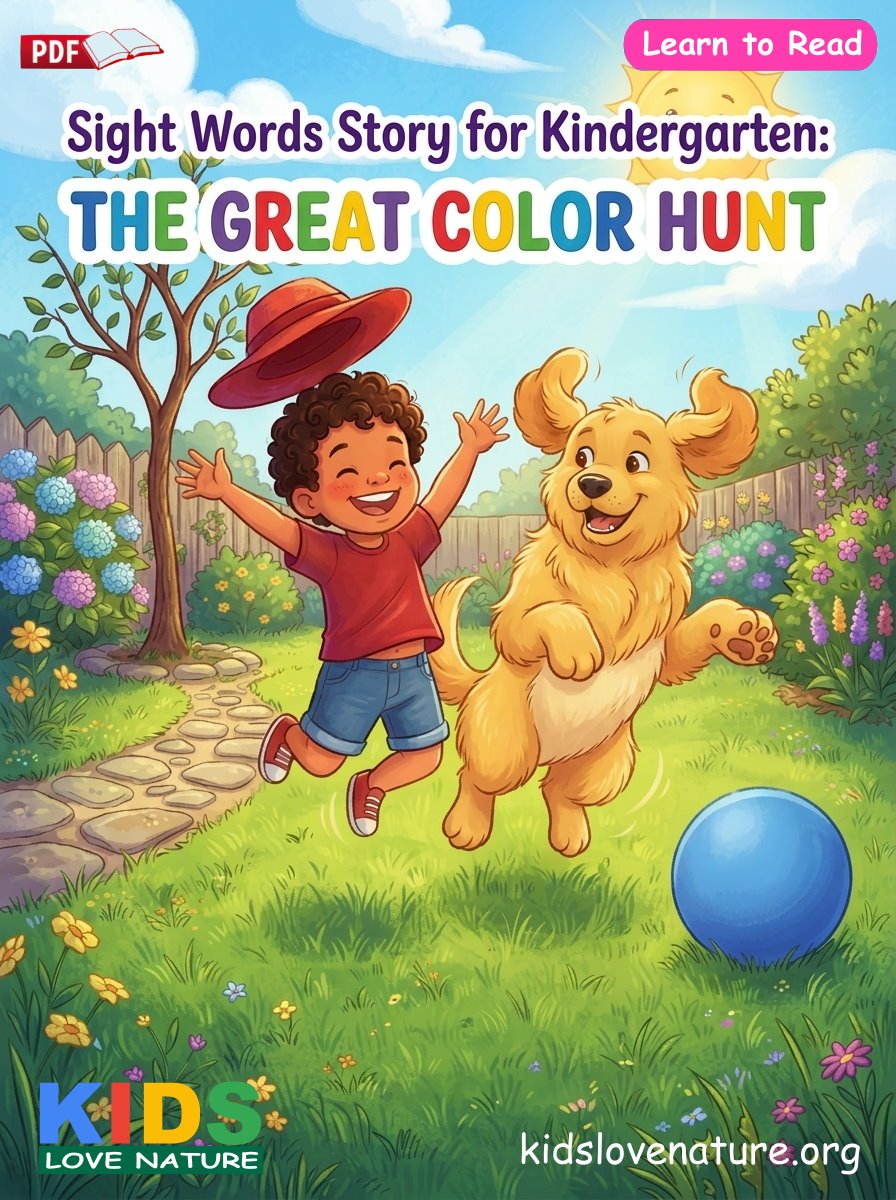
Sight Words Story for Kindergarten: The Great Color Hunt
A Note for Parents and Teachers This story is a fun, interactive tool designed to help preschool kids recognize and memorize high-frequency sight words. By seeing these words used in simple, repetitive sentences, children begin to identify them by sight rather than sounding them out. To help your child learn, read the story aloud together and encourage them to point to or shout out the bold words as they appear on the page. Our Word List The sight words practiced in this story are: a, and, away, big, blue, can, come, down, find, go, help, here, I, in, is, it, jump, little, look, make, me, my, not, one, play, red, run, said, see, the, three, to, two, up, we, where, yellow, and you. Mastering the Basics In conclusion, this story uses these 38 essential sight words in a familiar, playful context to build reading confidence. By repeating these words through narrative, kids learn to identify them instantly, which is the foundation for fluent reading. This method turns "work" into a game of discovery, helping children bridge the gap between recognizing letters and reading full sentences with ease. Story Summary In this playful narrative, children follow a group of friends as they search for colorful toys, cars, and animals. Through a series of simple activities—like jumping, running, and finding hidden objects—young readers are repeatedly exposed to 38 foundational sight words. The story uses vibrant colors (red, blue, yellow) and basic directions (up, down, here, away) to create a vivid world that reinforces word recognition through active, relatable play. Thoughts on the Story This story is highly effective for early childhood literacy because it prioritizes "scaffolded learning." By grouping sight words into logical clusters (e.g., colors with objects, actions with movement), it provides context that helps a child’s brain "stick" the word to a meaning. The sentence structures are intentionally repetitive, which is the gold standard for preschool learning as it builds confidence and allows the child to "predict" the next word, turning them from a listener into an active reader.